Laleh Foroughanfar, Ståle Holgersen, Lenita Kefala, Lisa Kings, Shelley Kotze and Nazem Tahvilzadeh
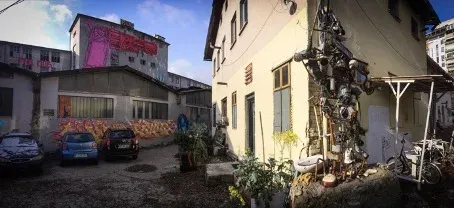
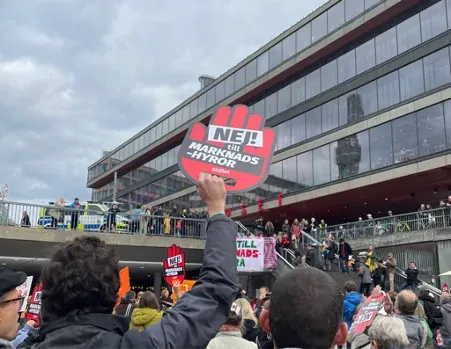
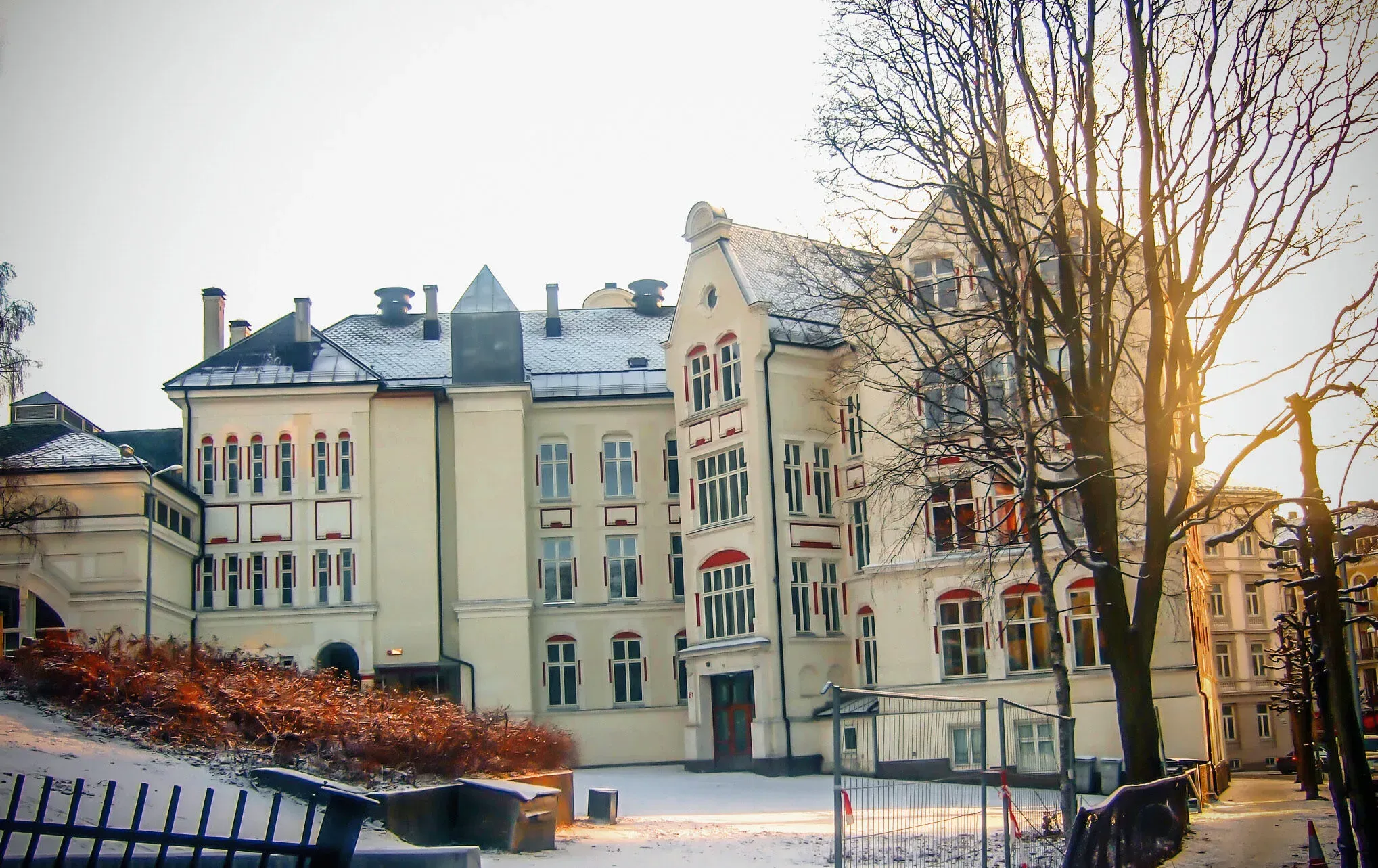
Illustration by David Peter Kerr Critical class theories have recently returned to the centre, in both academia and in policy discourses, after some decades in the shadow. In this respect: class is back. In the real world, of course, it never went away.
- Published
- September 21, 2023
- Issue
- Class and the City
- Reading time
- 4 min
The PDF isn’t ready yet.
Illustration by David Peter Kerr
Critical class theories have recently returned to the centre, in both academia and in policy discourses, after some decades in the shadow. In this respect: class is back. In the real world, of course, it never went away. Although some people believe that class had disappeared from the face of the earth, both classes and class struggles continued to produce our cities, even though academic spotlights were taken off them. As global and national inequalities have continued to increase during the last half-century, and as cities continue to be produced by class relations in all kinds of ways, the reinvigoration of class theory has been led by prominent researchers like Thomas Piketty, Andrew Sayer and Göran Therborn.
In urban studies, class never really disappeared. Perhaps it is more correct to say that it was hidden. After Engels published The Condition of the Working Class in England in 1845 (2013), and The Housing Question in 1872 (1942), almost a hundred years would pass before Marxists seriously started discussing class and the city (with notable exceptions like Walter Benjamin). But during the late 1960s onward, the interest exploded. For human geographers and urban theorists like Harvey (1999) and Smith (2008), it became a crucial understanding that preexisting class categories should not simply be added onto spatial analysis. Class relations and class struggle not only take place in space, but class struggle uses and produces spaces. In other words: class is spatial.
Class theories, again, never really disappeared. Rather, they are discussed in a variety of ways in relation to different subjects relevant for urban theory. It is perhaps more correct to say that class and the city were more often discussed indirectly: in terms of advanced marginality (LJD Wacquant) segregation and dual cities (Peter Marcuse), the local state (Cynthia Cockburn), gentrification (Neil Smith), collective consumption (Manuel Castells), housing (Michael Stone), production of space (Henri Lefebvre), real-estate developments (Francois Lamarche), economic geography (Richard Walker, Doreen Massey), landscapes (Don Mitchell), social exclusion (Jamie Gough), planning (Richard Foglesong, Allen J. Scott, Michael Dear), architecture (Bill Risebero), etc.. Class theory and concepts are thus veiled in other discourses, like gentrification, segregation, displacement, urban social movements, urban unrest, neoliberalism, entrepreneurialism, social sustainability. “Class” while still discussed; often is taken for granted and left undefined.
Still, explicit class concepts are scrutinised from different vantage points in urban theory. Harvey (1985), for example, discussed (factions of capitalist) classes in relation to the built environment; Edwards (1995) divided up class functions in urban development; Katznelson (1992) articulated four ‘layers’ in the city; and Bridge (1995) combined three levels of abstraction – mode of production, social formation and conjuncture – with three “critical moments of the realisation of class relations”. Some of the discussions that developed between the ‘70s and early ‘90s concerned the role of landlord-tenant as class relation (and similarities and differences to worker-capitalist relation), the role of the (local) state within a capitalist state function, and the relation between agency, policy and management structures, sex, power and social reproduction in the city (see Cockburn 1977).
Class also survived during the ‘00s through important work on intersectionality (see e.g., Molina 1997, McDowell 2009). It was very important to keep alive discussions on class, and always stress the very important relations between class and other social relations. But there was arguably a flip-side to this. As class was always considered one of several social relations, it was perhaps seldom given the space needed if we really wanted to understand the phenomena in depth (the same can be said about gender and racism). This is truly a challenge for the near future: to deepen our understanding of class while continuing to stress its relations – intersections, interconnections – to other social structures.
We argue that the relevancy of class theory needs more delicate treatment than current affairs admit, in order to grasp urban and spatial processes more deeply. It was from this perspective that three of us – Holgersen, Kings and Tahvilzadeh – decided to organise a PhD course “Class and the City”.
The aim was to bring the question of class, city, urban studies and geography up front: theoretically, empirically, and politically. During one full week in August 2022, we discussed how we can understand class theory (within and beyond Marxism), how various traditions understand class differently and what implications this has for urban theory. We discussed how phenomena like urban development and planning, gentrification, housing, participation, democracy, segregation, etc., can be understood in relation to class (theory), and how to understand relations between class, gender and racism.
The week was organised through lectures, seminars and a day with guided tours. In addition to the organisers, we had the honour of receiving lectures from Alan Mabin, Miguel A. Martínez, Irene Molina, Kirsteen Paton and Göran Therborn. During seminars the students commented on each other works, and we had two stops on our excursion in Stockholm. Guided by Tahvilzadeh we first visited Kista and Husby, including a community centre (Folkets hus) in Husby and discussed their experiences of community mobilisation around issues of relevance for the working class. Thereafter, and under guidance from Håkan Blomqvist, we explored the rich history of class and class struggle at Södermalm, Stockholm.
This special issue in Urban Matters emerges from this PhD course. As will be evident in the papers, we discussed different theories, perspectives, approaches and cases. Our aim was never to establish a “new” way of thinking about things, but rather to open a space for everyone who wants to restart a serious discussion of class in/and the city.
References
- Bridge, G. (1995) ‘The space for class? On class analysis in the study of gentrification’, Transactions of the Institute of British Geographers, 20(2), pp. 236–247.
- Cockburn, C. (1977) The local state: management of cities and people. Pluto Press.
- Edwards, M. (1995) ‘Agents and functions in urban development: Frameworks for analysis’, Cartas Urbanas, 4, pp. 26–39.
- Engels, F. (1872) The Housing Question (Marxist-Leninist Library. London: Martin Lawrence Limited.
- Engels, F. (2013) The Condition of the Working Class in England. Mansfield, CT: Martino Publishing.
- Harvey, D. (1982) The Limits to Capital. London: Verso.
- Harvey, D. (1985) The Urbanization of Capital. Oxford: Basil Blackwell.
- Holgersen, S. (2020) ‘The “Middle Class” Does Not Exist: A Critique of Gentrification Research’, Intervention in Antipode [Preprint]. Available at: https://antipodeonline.org/2020/09/09/the-middle-class-does-not-exist/.
- Holgersen, S. (2021) ‘The Urban’, in B. Skeggs et al. (eds) The Sage Handbook of Marxism. London: Sage Publications, pp. 1503–1518.
- Katznelson, I. (1992) Marxism and the City. Oxford: Clarendon Press.
- Mcdowell, L. (2009) Working Bodies: Interactive Service Employment and Workplace Identities. Oxford: Wiley-Blackwell.
- Molina, I. (1997) ‘Stadens rasifiering: Etnisk boendesegregation i folkhemmet’. Uppsala University.
- Smith, N. (1996) The new urban frontier. Gentrification and the revanchist city. New York: Routledge.
- Smith, N. (2008) Uneven Development: Nature, Capital, and the Production of Space. London: University of Georgia Press.
- Wright, E.O. (2015) Understanding class. London: Verso.
About the authors
Laleh Foroughanfar
Malmö Universtiy- IUR
Laleh Foroughanfar is a researcher at Institute for Urban Studies at Malmö University. She holds a PhD (2022) from Lund University School of Architecture. Her research focuses on urban marginalization, otherwise architecture, and socio-materiality and temporalities of everyday life. Her PhD thesis, entitled The Street of Associations: Migration and Infrastructural (Re)Production of Norra Grängesbergsgatan, Malmö, explores the transformation of a post-industrial working-class street, emerging from the intersection of de-industrialization, global migration, and urban marginalization in Malmö.

Ståle Holgersen
Örebro University
Ståle Holgersen is associate professor in Human Geography at Örebro University. He is the author of “Staden och Kapitalet” (2017) and “Krisernas tid” (2022) (both at Daidalos), and his research interests include crisis, class, cities, housing and political ecology.

Lenita Kefala
Stockholm University
Lenita Kefala is a PhD student in ethnology at the Department of Ethnology, Gender studies and History of religion at Stockholm University. In her thesis project, she investigates experiences of the contemporary sublet housing market in Stockholm, Sweden. Her research interest is the intersection of housing inequality, lived experiences, precarity and feminist theory.

Lisa Kings
Södertörn University
Lisa Kings is an associate professor of social work at Södertörn University, Sweden. Her research interests center on the intersections between civil society and critical urban research. She has published on the organization of local associations and social movements in marginalized neighbourhoods.

Shelley Kotze
University of Gothenburg
Shelley Kotze is a PhD candidate in Human Geography, at the University of Gothenburg. Her research is concerned with the governance of urban parks, with a particular focus on the urban regimes which underpin the models of funding, relationships between design and management, and the implications of resulting multifunctionality.

Nazem Tahvilzadeh
Södertörn University
Nazem Tahvilzadeh is associate professor in political science and lecturer in public administration at Södertörn University. His research deals with issues of democracy, citizen participation, public policy and administration in urban governance.
Cite this article
Harvard
Foroughanfar, L. et al. (2023) ‘Class and the City’, Urban Matters, 6. Available at: https://urbanmatters-staging.leadm.site/articles/class-and-the-city/.
APA
Foroughanfar, L., Holgersen, S., Kefala, L., Kings, L., Kotze, S., & Tahvilzadeh, N. (2023). Class and the City. Urban Matters, 6. https://urbanmatters-staging.leadm.site/articles/class-and-the-city/
BibTeX
@article{foroughanfar2023class,
  author = {Foroughanfar, Laleh and Holgersen, Ståle and Kefala, Lenita and Kings, Lisa and Kotze, Shelley and Tahvilzadeh, Nazem},
  title = {{Class and the City}},
  journal = {Urban Matters},
  year = {2023},
  volume = {6},
  issn = {2004-206X},
  publisher = {Institute for Urban Research, Malmö University},
  url = {https://urbanmatters-staging.leadm.site/articles/class-and-the-city/}
}