Urban MattersIssue 5, 2023
EvictabilityEditorial
Evictability – Displacement as a systemic condition and an everyday lived experience


 Mauricio Rogat, Maria Persdotter and Valeria Raimondi
Illustration by David Peter Kerr This theme issue, entitled Evictability: Displacement as a systemic condition and an everyday lived experience, addresses multiple dimensions of eviction and displacement, considering cases and experiences in different geographical contexts while juxtaposing…
- Published
- June 23, 2023
- Issue
- Evictability
- Reading time
- 3 min
The PDF isn’t ready yet.
Illustration by David Peter Kerr
This theme issue, entitled Evictability: Displacement as a systemic condition and an everyday lived experience, addresses multiple dimensions of eviction and displacement, considering cases and experiences in different geographical contexts while juxtaposing governmental strategies and radical counterstrategies. Specifically, the SI focuses on practices of removal and expulsion – and experiences of being (continuously) removed and pushed around – that play out at different scales, from the urban scale to the more intimate one of the home and other forms of shelter.
Conceptually, this theme issue centres on the notion of evictability, defined as “the possibility of being removed from a sheltering place” (van Baar 2017: 214). The term was first coined by political scientist Huub van Baar (2017) in an effort to radically de-nationalise the notion of borders and bordering. Borrowing from Nicholas De Genova’s seminal work on “deportability” (2002), the concept of evictability links together migration studies with urban and housing studies, and offers an analytical lens to examine the continuities between experiences and practices of displacement at different scales within, and beyond, those of the nation-state. It thus foregrounds the interconnections between the centrifugal processes of deportation and externalisation and securitsation of borders and the centripetal processes of racialised differentiation, dispossession and expulsion.
Notably, the concept of evictability constitutes one of several novel attempts to theorise such connections. Thus, it resonates with recent conceptual work on displaceability (Yiftachel, 2018), expulsions (Sassen, 2014), un-homing (Elliott-Cooper et al., 2020), practices of illegalisation (Roy & De Genova, 2020), racial banishment (Roy, 2019), and “continuous spatial vulnerability” (Lind, 2020).
These concepts allow us to further expand the understanding of displacement from a discrete act to a systemic condition and to an “ongoing state of being” (Delaney, 2004). What is it like to live with the constant threat of being forcefully removed from one’s home? This is a question that is addressed in several of the contributions to the issue.
Rebecka Söderberg’s photo essay, featuring images taken by children in Mjølnerparken in Copenhagen, Denmark, contextualises the condition of un-homing and evictability within the realm of the so-called Ghetto laws enacted in 2018.
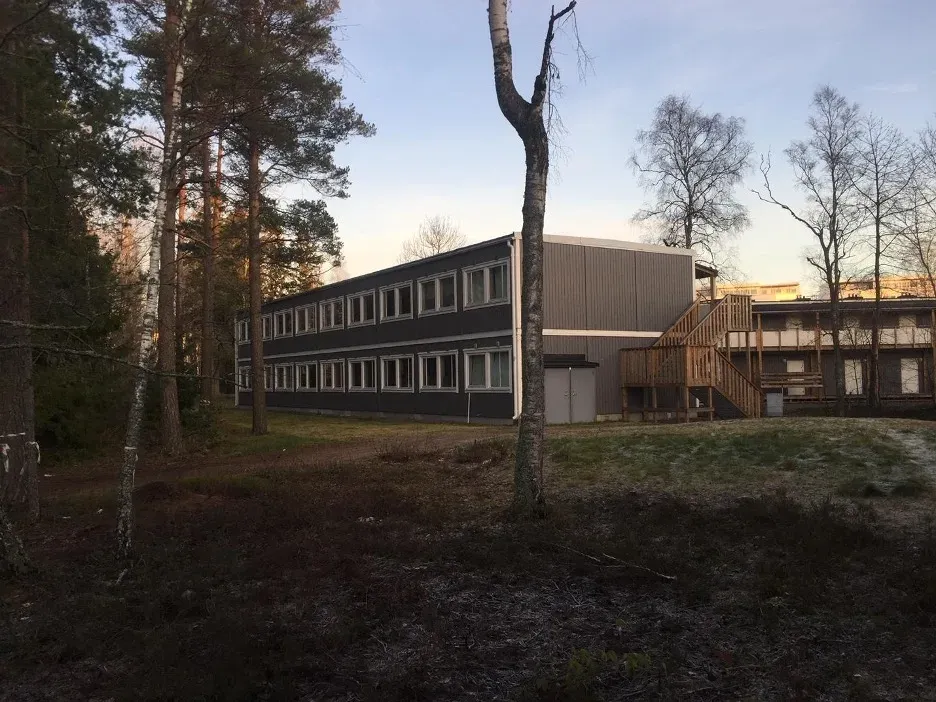
Similarly, Mauricio Rogat’s piece about migrants’ constant temporarisation of housing conditions as partly stemming from the interplay between the Swedish dispersal policy, the Settlement Act, and the privatisation of the housing market in Stockholm, showcases further how evictability is produced in the intersection between housing and migrant dispersal regimes.
From a different perspective, Leyla Bektaş Ata reflects on evictability, drawing on her own experiences of growing up in Limontepe in Turkey and returning to the very same place for fieldwork, illustrating the connections between bodily memories of the home and the actual soil it emerges from, highlighting how the violent experiences of un-homing and eviction are inseparable with life itself.
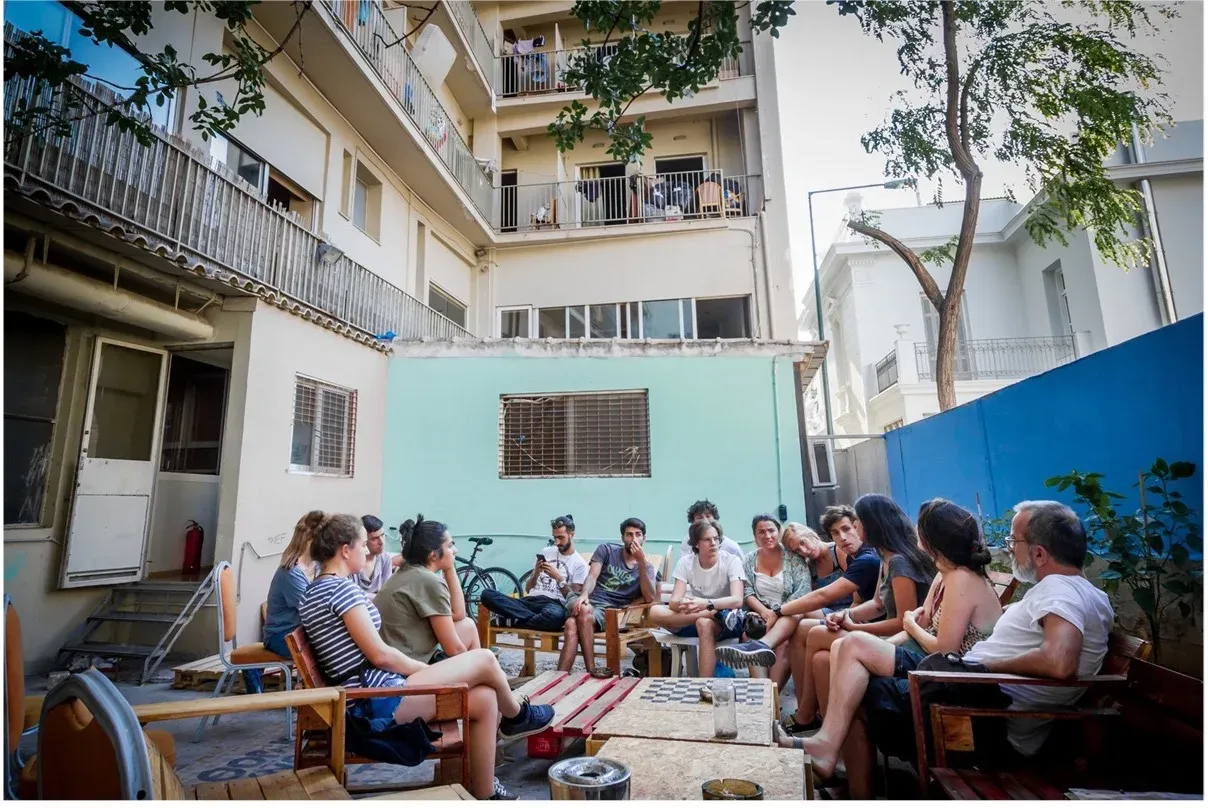
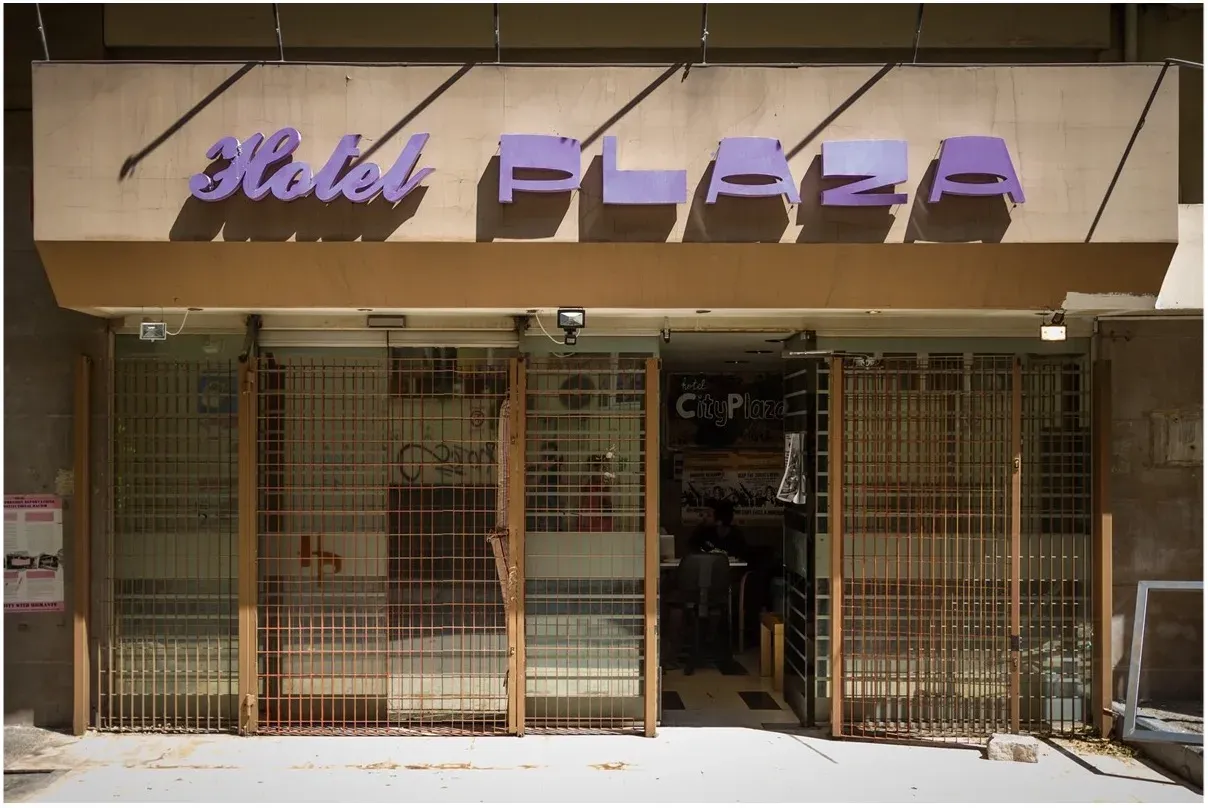
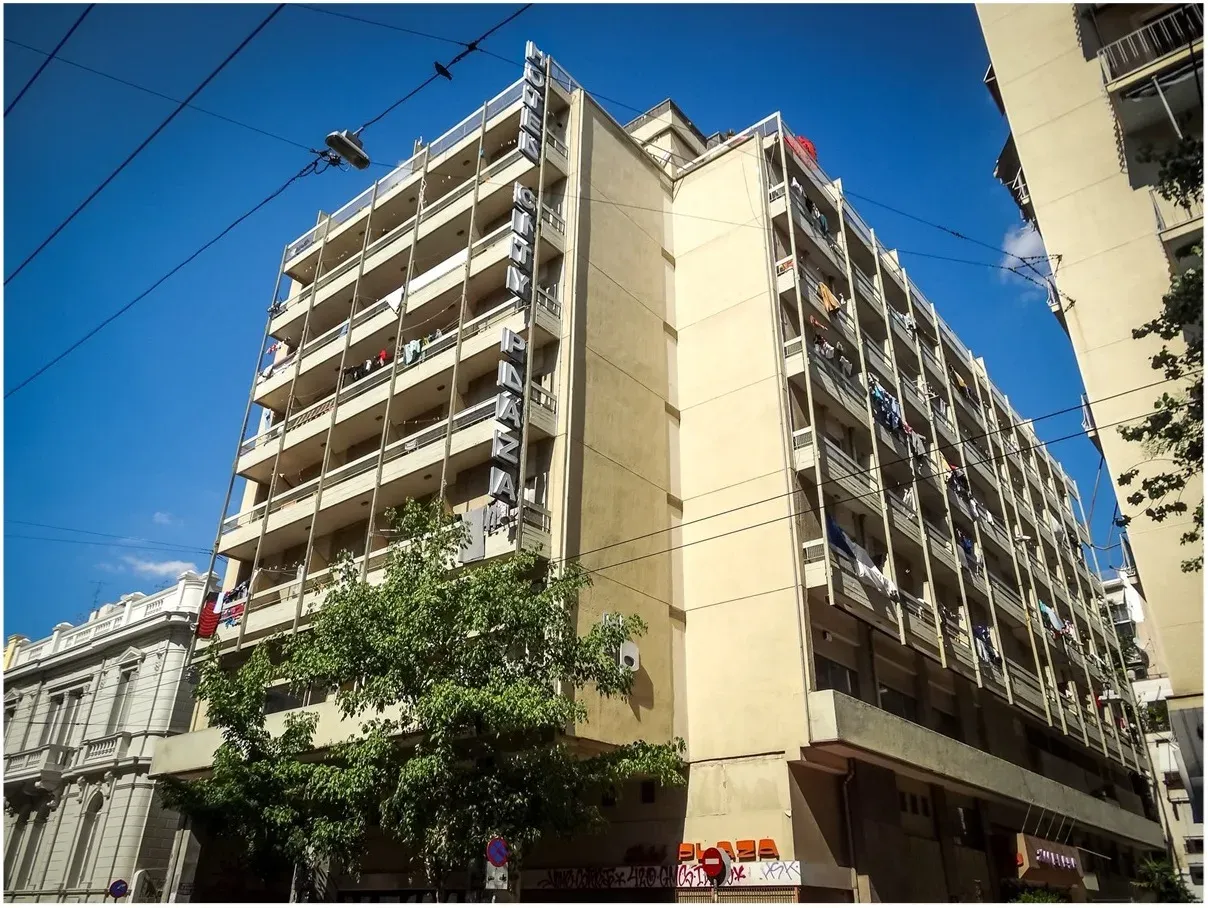
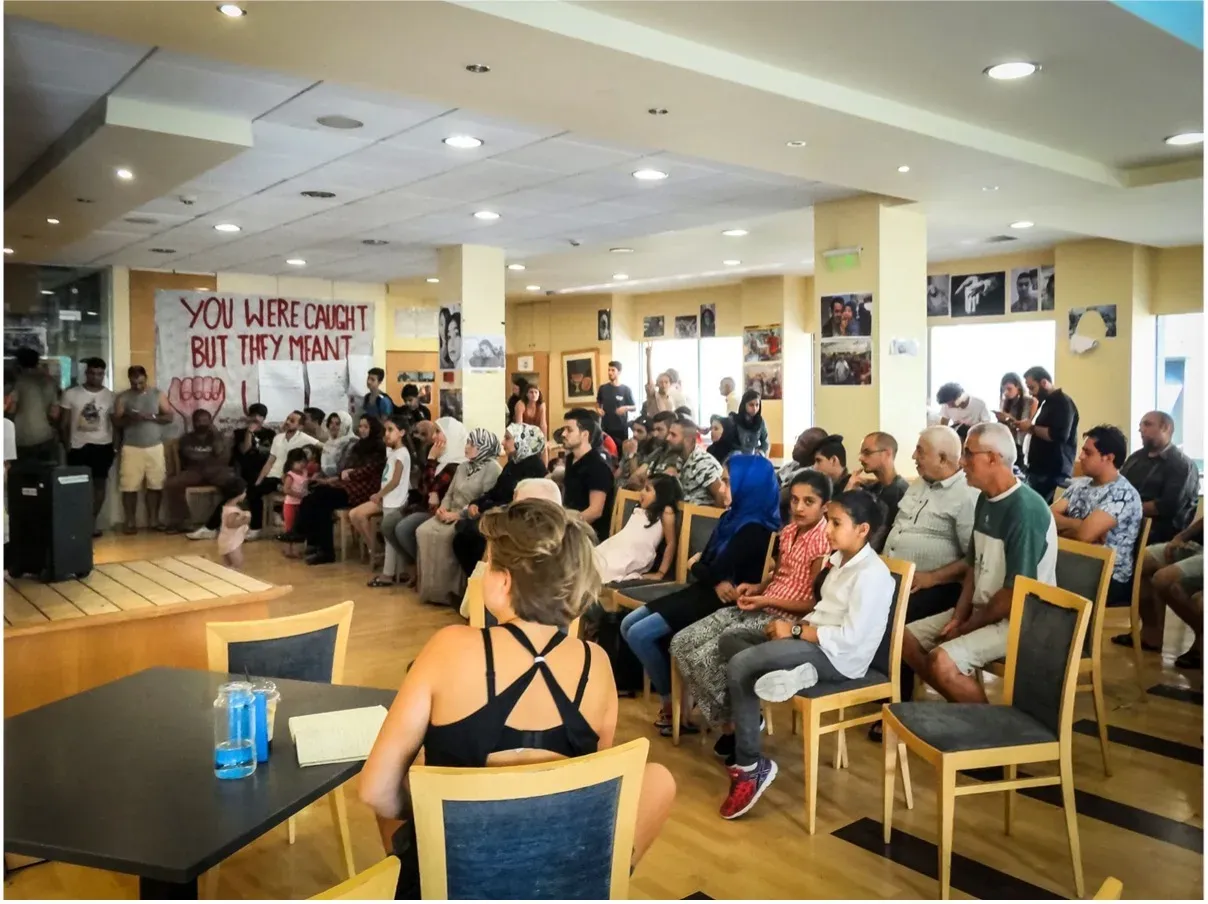
By continuing to build on the external social and existential meanings of the home and evictability, Valeria Raimondi and Mattia Alumni Cardinali’s photo essay about City Plaza Hotel in Athens takes a different approach and describes how squatting and practices of collective homemaking in conditions of temporariness and uncertainty, function as counterstrategies to evictability and to cynical neoliberal migration and housing regimes.
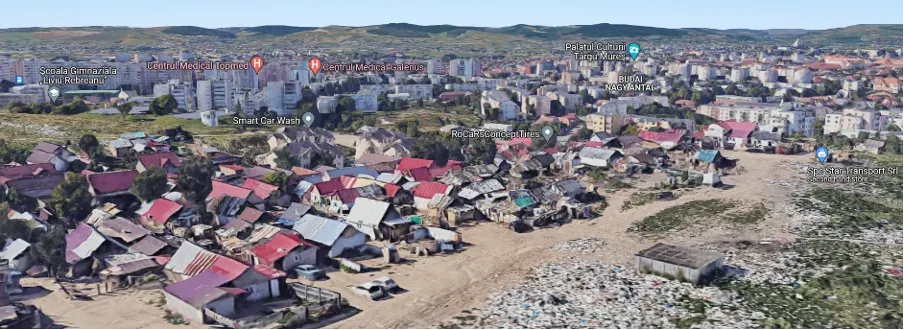
While the mentioned contributions focus on the intimate level of (un)homing and evictability in connection to policies, Filip Alexandrescu and Lucrina Ștefănescu zoom out to discuss “slums” and the existence of evictability from a helicopter view, arguing that “slums” are the consequences of contemporary developments and systemic transformations in European cities.
In a similar vein, the exchange between Maria Persdotter and Irina Zamfirescus focuses on the dynamics of Romanian Roma migrations to Sweden and other wealthy EU Member States. Their conversation addresses, among other things, how exclusions that many mobile Roma EU-citizens experience – as a result of the conditionalities written into the EU free movement directive – are mirrored by similar mechanisms and patterns of exclusion at the local level in Romania as well as in Sweden.
The theme issue is a product of a workshop at the Institute for Urban Research (IUR) at Malmö University in June 2022, and a panel session at the Nordic Migration Research Conference, RE:MIGRATION, in Copenhagen, Denmark, 2022. During both the workshop and the panel, we elaborated on the concept of evictability by testing it empirically at the urban scale, and relating it to concepts such as deportability, dispossession, displacement, evictions, struggles, unhoming and other key concepts and issues of radical geography. The idea was to find common ground between migration studies and urban studies and to highlight the role of urban displacements in the governance of “unwanted” migrants and citizens alike.
The Malmö workshop was a very engaging and stimulating experience and brought together the gazes and perspectives of critical scholars, activists, and scholar-activists from different parts of Europe and the world. Same for the conference panel. Both events also raised several urgent issues, which we further explore in this thematic issue.
About the authors

Mauricio Rogat
Linköping University
Mauricio Rogat is currently a postdoctoral researcher at the Division of Migration, Ethnicity and Society (REMESO) at Linköping University, Sweden, working in a project about digital infrastructures and the reconfigurations of sovereignty, borders, and imagined communities. He has a PhD in social anthropology from the School of Global Studies, Gothenburg University. Mauricio’s thesis deals with temporary housing, the logistification of migration policies in Sweden and hypermobility.

Maria Persdotter
Linköping University
Maria Persdotter is a human geographer, currently employed as a postdoc researcher in welfare law at Linköping University. Her PhD thesis, entitled Free to Move Along, examines the (local) government response to the arrival and presence of Romanian Roma migrants in Sweden in the early to mid-2010s. She has written about the contentious evictions of Roma squatter settlements and about the exclusions of impoverished EU citizens from the Swedish welfare state. Most of her writing is available here: https://www.researchgate.net/profile/Maria-Persdotter

Valeria Raimondi
University of Bologna
Valeria Raimondi is a political geographer, and she has a PhD in Urban Studies from the Gran Sasso Science Institute in L’Aquila, Italy. The interdisciplinary approach of her work is at the crossroads of urban and political geography, as well as critical border, migration, and citizenship studies. In her PhD research, she addressed the issue of temporary reception of migrants in Europe, focusing on migrant squatting in Greece as experiences of activism, self-organisation and cohabitation.
Cite this article
Harvard
Rogat, M., Persdotter, M. and Raimondi, V. (2023) ‘Evictability – Displacement as a systemic condition and an everyday lived experience’, Urban Matters, 5. Available at: https://urbanmatters-staging.leadm.site/articles/evictability-displacement-as-a-systemic-condition-and-an-everyday-lived-experience/.
APA
Rogat, M., Persdotter, M., & Raimondi, V. (2023). Evictability – Displacement as a systemic condition and an everyday lived experience. Urban Matters, 5. https://urbanmatters-staging.leadm.site/articles/evictability-displacement-as-a-systemic-condition-and-an-everyday-lived-experience/
BibTeX
@article{rogat2023evictability,
  author = {Rogat, Mauricio and Persdotter, Maria and Raimondi, Valeria},
  title = {{Evictability – Displacement as a systemic condition and an everyday lived experience}},
  journal = {Urban Matters},
  year = {2023},
  volume = {5},
  issn = {2004-206X},
  publisher = {Institute for Urban Research, Malmö University},
  url = {https://urbanmatters-staging.leadm.site/articles/evictability-displacement-as-a-systemic-condition-and-an-everyday-lived-experience/}
}